

Are Dirt Bikes Street Legal in Iowa?

Dirt bikes are a popular option for those who want to enjoy Iowa's trails, off-road parks, and open countryside. Whether you are an experienced rider or just getting started, one of the most common questions people ask is: are dirt bikes street legal?
The quick answer is that most dirt bikes are not street legal in Iowa. A traditional dirt bike is designed for off-road use and generally doesn't meet the requirements to be road legal. They also may not have the best equipment; they likely are not registered, and the operator might not even have a license. However, there are some exceptions, and in some cases, modifications made to the vehicle can make it a street-legal dirt bike. However, it's very important that you understand the laws, even with a converted dirt bike, to ensure you avoid fines, protect yourself in an accident, and ensure you are riding legally.
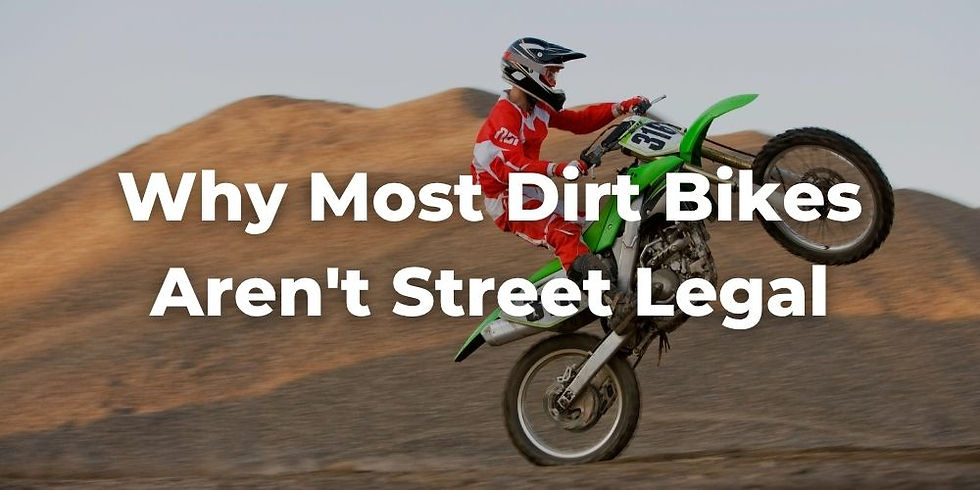
Why Most Dirt Bikes Aren't Street Legal
Though other two-wheeled motor vehicles, like motorcycles, are street legal, dirt bikes are made for trails, tracks, and off-road natural terrain. Manufacturers design them to be lightweight and maneuverable instead of having things like high and low beams and tail lights. All of this is important for road safety, however.
Motorcycles are large and heavy, they have headlights and brake lights, and they are fitted with things like license plate holders, DOT approved tires, turn signals, and DOT approved headlights. This makes them much safer than many dirt bikes and why most riders cannot ride legally on public roads.
Can a Dirt Bike Be Made Street Legal in Iowa?
There are very few exceptions in Iowa, even with modifications, that would allow a dirt bike to be used on public roads.
Dirt bikes that are titled or meant to be used for off-road use only cannot be registered for highway use. Even if you make a dirt bike that has lights, mirrors, and other equipment, the vehicle's title and manufacturer designation might prevent it from becoming street legal.
For a rider who is considering buying a used bike, it's very important to realize this if you think you want to ride on trails and public roads. A better option would be to purchase a dual-sport motorcycle instead of trying to make a dirt bike legal.
What Is a Dual-Sport Motorcycle?
Many people confuse dirt bikes with dual-sport motorcycles. They do look similar, but a dirt bike is meant for off-road riding. A dual-sport motorcycle is meant to operate on both highways and off-road trails. These motorcycles typically have safety equipment like lights, mirrors, tires, and other features necessary to comply with state laws.
If you are planning to ride through Des Moines or travel from one riding area to the next on a public road, it's best to have a dual-sport motorcycle.
Where Can You Legally Ride a Dirt Bike in Iowa?
Though most dirt bikes cannot be ridden on a city street or highway, there are plenty of places in Iowa where you can ride them.
Private Property
You can ride a dirt bike on private property if you have the permission of the landowner. It's important that you respect property lines, though, and avoid trespassing.
Designated OHV Trails and Parks
Iowa also has areas for off-highway vehicles (OHV) where dirt bikes are welcome. Many of these spaces are maintained for recreational riding and they have trails were dirt bike owners of various skill levels can ride.
Keep in mind that the state generally requires you to have OHV registration in place through the Iowa Department of Natural Resources, and some drivers, specifically younger riders, often need to complete a safety course.
Motocross Tracks
Private motocross tracks remain one of the safest and most popular places to ride. These facilities are designed specifically for dirt bikes and typically have safety rules in place for riders of all ages.
What About Riding Around Your Neighborhood?
Some dirt bike owners assume that they can ride slowly in their neighborhood or on city streets for short trips. However, that's generally not the case. If you have a dirt bike that is not registered as street legal, then riding it on a public road, even for a short distance, is likely a violation of Iowa law.
Local rules and laws typically state that this isn't allowed, and law enforcement may be called to respond to complaints of dirt bikes being used on public streets.
Even if you are riding slowly and responsibly, the short answer is that it's probably illegal to ride a dirt bike in your neighborhood.
Registration Requirements in Iowa
You might think that because a dirt bike isn't street legal that you don't have to register it. This, however, isn't true. Though you don't have to register it as a street legal vehicle, you do have to get registration through the Iowa Department of Natural Resources in most cases. This allows you to legally operate the dirt bike in approved areas, but it doesn't mean it's legal on public streets.
Again, if you have a dual-sport motorcycle, you may register it like you would a car, but you also have to have a license, insurance, and safety equipment like other drivers on the road.
Why Street Legality Matters
Some riders may think the risk of riding an off-road motorcycle on public streets is limited to receiving a traffic ticket.
However, the consequences can become much more serious if an accident occurs.
If you're involved in a collision while operating a motorcycle that isn't legally permitted on the roadway, questions may arise regarding:
Insurance coverage
Vehicle registration
Liability
Comparative fault
Property damage claims
Although another driver's negligence may have caused the accident, insurance companies often look for reasons to minimize or deny claims. Having questions about the legality of the motorcycle can complicate an already stressful situation. For more information, these motorcycle accident lawyers in Des Moines may be able to help.
Common Causes of Dirt Bike Accidents
Whether riding off-road or on public streets, accidents happen for many different reasons.
Some of the most common include:
Distracted Drivers
Drivers looking at phones, GPS devices, or passengers may fail to notice a motorcycle until it's too late.
Failure to Yield
One of the leading causes of motorcycle crashes involves motorists turning left in front of an approaching rider.
Unsafe Lane Changes
Motorcycles occupy less visual space than passenger vehicles, making them easier to overlook when drivers fail to check blind spots.
Excessive Speed
Speed reduces reaction time and increases the severity of injuries in nearly every type of collision.
Poor Road Conditions
Loose gravel, potholes, uneven pavement, and road debris present unique hazards for motorcycles, especially lightweight dirt bikes with specialized tires.
Mechanical Problems
Poor maintenance, worn tires, faulty brakes, or steering issues can contribute to serious accidents both on and off the road.
What Should You Do After a Dirt Bike Accident?
If you're involved in a dirt bike accident, your first priority should always be your health and safety.
If possible:
Seek immediate medical attention.
Contact law enforcement if the accident occurred on a public roadway.
Photograph the accident scene and vehicle damage.
Obtain contact information for witnesses.
Keep copies of medical records and repair estimates.
Notify your insurance company.
Avoid discussing fault before the facts have been fully investigated.
Even injuries that initially seem minor can worsen over time. Prompt medical evaluation not only protects your health but also documents the injuries related to the accident.
Can You Recover Compensation After a Dirt Bike Accident?
Every accident is different.
If another driver's negligence caused your injuries, you may be entitled to pursue compensation for damages such as:
Medical expenses
Future medical treatment
Lost wages
Reduced earning capacity
Pain and suffering
Property damage
Permanent disability
The value of a claim depends on many factors, including the severity of the injuries, available insurance coverage, and the specific facts surrounding the accident.
Because motorcycle and dirt bike accidents often involve serious injuries, it's important to understand your legal rights before accepting an insurance settlement.

When Should You Contact an Attorney?
Not every accident requires legal representation. However, speaking with an attorney may be beneficial if:
You suffered serious injuries.
Fault is being disputed.
An insurance company denies your claim.
Multiple parties were involved.
You face significant medical expenses.
A loved one was killed in a motorcycle accident.
An attorney can explain your legal options, investigate the circumstances surrounding the crash, and help protect your interests throughout the claims process. They can explain how to file a class action lawsuit as well.
Contact Tom Fowler Law
While dirt bikes provide plenty of excitement off-road, Iowa law places important limits on where and how they may be operated. Understanding whether your motorcycle is street legal can help you avoid unnecessary legal issues and better protect yourself if an accident occurs.
If you or a loved one has been injured in a dirt bike or motorcycle accident in Des Moines or elsewhere in Iowa, Tom Fowler Law can help you understand your rights and evaluate your legal options. An experienced personal injury attorney can answer your questions, deal with the insurance companies, and help you pursue the compensation you deserve. Reach out today for a free consultation.